


 English
 Español
 Pусский
 العربية
 Français

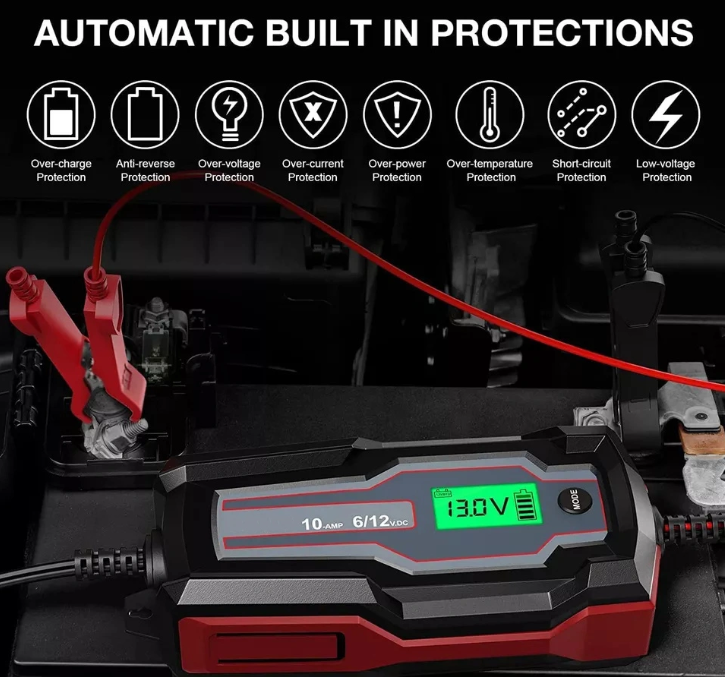
A car battery charger is a device used to charge a dead car battery. It's an essential tool for car owners looking to keep their vehicles running smoothly and avoid being stranded on the road with a dead battery. The following are frequently asked questions about car battery chargers including definitions, working principles, types and uses.
Definition
A car battery charger is a device that supplies electrical energy to a car battery to recharge it. It works by converting the AC power from a household electrical outlet to DC power that can be used to charge a car battery. Car battery chargers come in various sizes and types, but they all perform the same basic function of recharging a car battery.
Working Principle
A battery charger converts AC (alternating current) power from an electrical outlet into DC (direct current) power, which is then used to charge a battery.
Trickle chargers and float chargers provide a low, constant current to the battery, which is used to maintain its charge. Smart chargers use a microprocessor to control the charging process and adjust the charging rate based on the battery's condition. Jump starters provide a high current to the battery to quickly recharge it and jump-start the car.
The charging process generally consists of three stages: bulk charging, absorption charging, and float charging. During the bulk charging stage, the charger provides a high current to the battery to quickly charge it up. During the absorption charging stage, the charging current is reduced to prevent overcharging and to allow the battery to fully charge. Finally, during the float charging stage, the charger provides a low, constant current to maintain the battery's charge level.
The working principle of a solar charger is different from other chargers. Solar chargers use solar panels to convert sunlight into electricity, which is then used to charge the battery. The solar panels consist of photovoltaic cells, which are made of silicon and other materials that generate electricity when exposed to sunlight.
Notes: It is important to use the right type of charger for the specific battery and to follow the manufacturer's instructions to avoid damaging the battery or the charger.
Types of Car Battery Chargers
There are several types of car battery chargers available in the market. Some of the most common types include:
Trickle chargers: These chargers provide a slow, steady charge to the battery over a long period of time. They are ideal for maintaining the charge of a battery that is not being used frequently


Float chargers: Similar to trickle chargers, float chargers also provide a slow charge, but they are designed to maintain the battery charge at a specific level. They are typically used for batteries that power devices like alarm systems or emergency lighting.
Smart chargers: These chargers use microprocessors to control the charging process and adjust the charging rate based on the battery's condition. They are ideal for charging batteries that are deeply discharged or for maintaining the charge of a battery over a long period of time.


Jump starters: These are portable battery chargers that are used to jump-start a car's battery when it is dead. They typically come with built-in safety features to prevent overcharging and short circuits.


Solar chargers: These chargers use solar panels to convert sunlight into electricity, which is then used to charge the car battery. They are ideal for outdoor use or for charging batteries in remote locations.
Portable chargers: These are small, compact chargers that can be carried in a car or backpack. They are ideal for charging a dead battery in an emergency or for charging batteries on the go.
Usage of Car Battery Chargers
Before using a charger, it is important to read the manufacturer's instructions carefully to ensure that it is used correctly. The charger should be connected to the battery in the correct polarity, and the charging process should be monitored to avoid overcharging the battery.
Step 1. Make sure the charger is appropriate for the type of battery in your car. Check the voltage and amperage requirements of your battery, and choose a charger that is compatible.
Step 2. Make sure the charger is unplugged and turned off before connecting it to the battery.
Step 3. Locate the positive and negative terminals on the battery. The positive terminal is usually marked with a "+" symbol, and the negative terminal is usually marked with a "-" symbol.
Step 4. Connect the red (positive) clamp of the charger to the positive terminal of the battery. Make sure the connection is tight and secure.
Step 5. Connect the black (negative) clamp of the charger to a metal part of the car's frame, away from the battery. This will help ground the charger and prevent sparks.
Step 6. Plug in the charger and turn it on. Set the charger to the appropriate voltage and amperage for your battery.
Step 7. Wait for the battery to charge. The charging time will depend on the size and condition of the battery, as well as the charger's output. It's important to monitor the battery periodically during the charging process.
Step 8. Once the battery is fully charged, turn off the charger and unplug it from the outlet. Disconnect the clamps from the battery in the reverse order that they were connected.
Step 9. Start the car and let it run for a few minutes to ensure that the battery is fully charged and functioning properly.
A car battery charger is an essential tool for every car owner. It can help keep the car battery charged and avoid being stranded on the road with a dead battery. There are several types of car battery chargers available in the market, and each has its own advantages and disadvantages. Choosing the right type of charger depends on the requirements of the car owner. Using a car battery charger is a simple process, but it is important to read the manufacturer's instructions carefully to ensure that it is used correctly.


